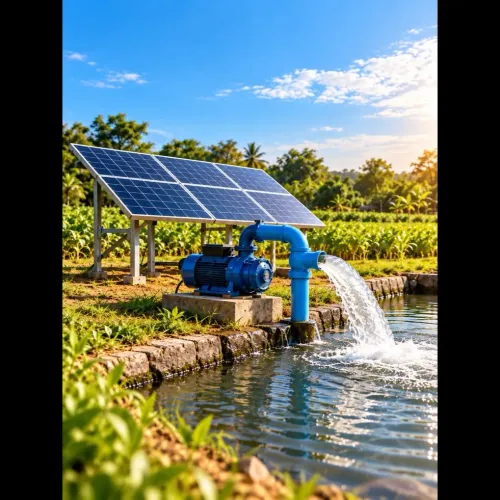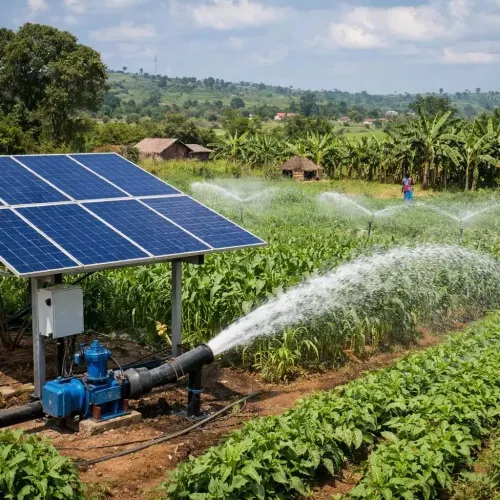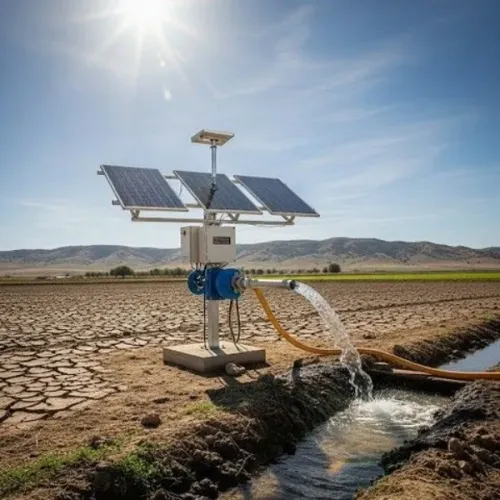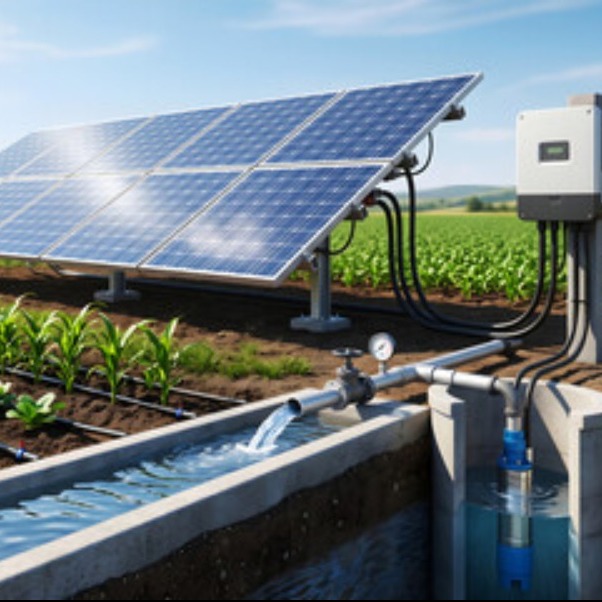
Efficient water management is essential for modern agriculture, and solar-powered water pumping offers a smarter way to manage irrigation and agricultural water requirements. By combining advanced pump technology with clean solar energy, solar water pump systems can provide a reliable solution for moving water from borewells, open wells, ponds, reservoirs, and other water sources to farms, storage tanks, and irrigation systems.
A professionally designed solar water pumping system uses electricity generated by solar panels to operate the pump. This allows farmers and agricultural users to utilize available sunlight as a renewable energy source while reducing dependence on conventional electricity or fuel-powered pumping.
Solar water pumps can be designed for different farm sizes and applications. The appropriate system depends on factors such as water source, borewell depth, required flow rate, pumping head, daily water requirement, irrigation method, available solar energy, and site conditions.
🌾 Agricultural and farm irrigation
💧 Borewell water pumping
🚰 Open-well and surface-water pumping
🌊 Water transfer to storage tanks
🌱 Drip irrigation systems
💦 Sprinkler irrigation systems
🐄 Farm and livestock water requirements
🏞️ Agricultural water distribution
☀️ Key Benefits of Solar Water Pumps
Renewable Energy:
Solar pumps use sunlight to generate the electricity needed for water pumping, providing a cleaner energy alternative.
Reduced Fuel Dependence:
Solar-powered pumping can reduce reliance on diesel-powered pumps for suitable agricultural applications.
Efficient Water Delivery:
Properly selected pumps and system components can help deliver water according to the farm's specific requirements.
Flexible Applications:
Solar pumping systems can be configured for borewell, surface-water, irrigation, and water-transfer requirements.
Sustainable Farming:
Using renewable energy for water pumping supports responsible energy use and sustainable agricultural practices.
WhatsApp: 7875756765
Address-Lekha nagar. Nashik
Keywords