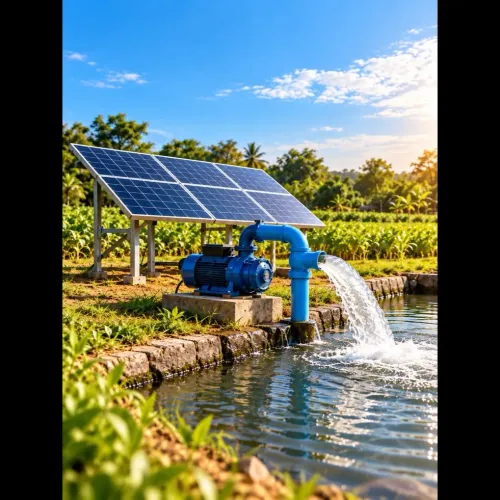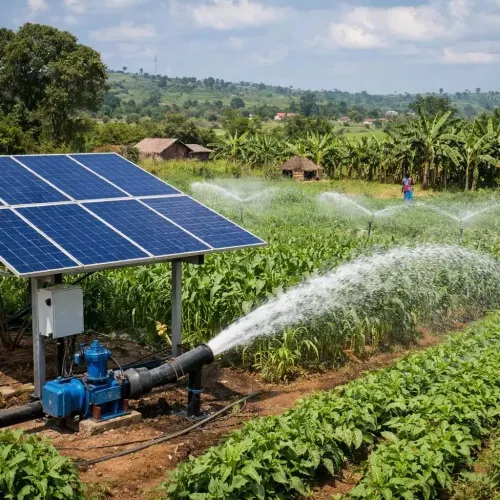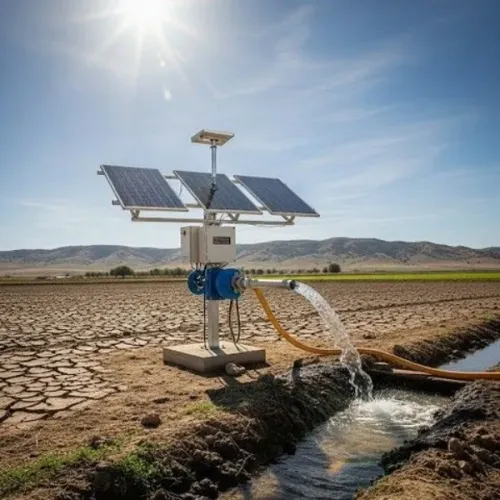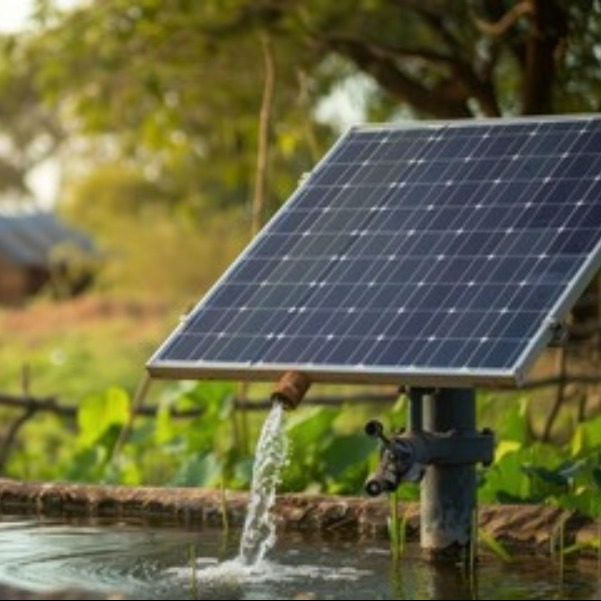
Modern water management requires reliable, efficient, and sustainable pumping solutions. Solar water pump technology combines renewable solar energy with advanced pumping systems to provide an efficient solution for agricultural irrigation, water transfer, borewell pumping, storage-tank filling, and other water-supply applications.
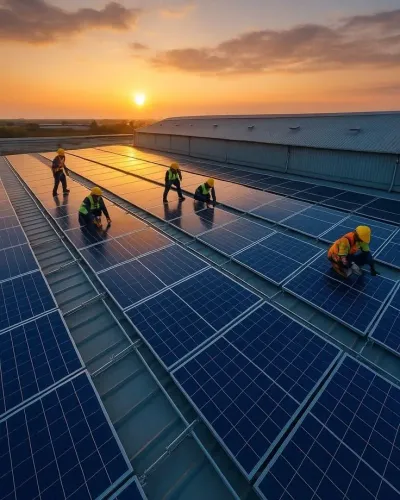
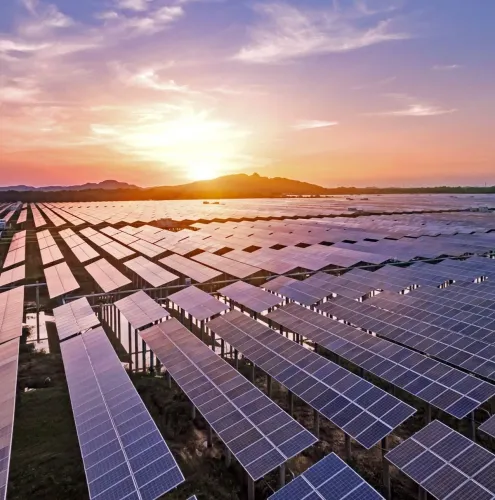
By converting sunlight into electricity through solar photovoltaic (PV) panels, a solar pumping system can operate the water pump using renewable energy. This provides an alternative to conventional electricity and fuel-powered pumping, particularly for locations where reliable grid power may be limited or where reducing fuel dependence is an important consideration.
A properly engineered solar water pumping system can be designed around the site's specific water requirements. Factors such as water source, borewell depth, pumping head, required flow rate, pipe size, daily water demand, available sunlight, and irrigation method are important when selecting the appropriate pump and solar capacity.
🌾 Farm and agricultural irrigation
💧 Borewell and deep-water pumping
🌊 Surface-water pumping
🚰 Water transfer to storage tanks
🌱 Drip irrigation systems
💦 Sprinkler irrigation systems
🐄 Livestock and farm water supply
🏭 Suitable commercial and industrial water applications
🏘️ Water distribution and selected community applications
Advantages of Solar Water Pump Technology
☀️ Renewable Power Source
Solar pumps utilize sunlight as an energy source, supporting cleaner and more sustainable pumping operations.
⛽ Reduced Fuel Dependence
For suitable applications, solar pumping can reduce reliance on diesel-powered water pumps.
💧 Efficient Water Movement
A correctly sized pump and solar system can deliver water according to the required flow and pumping conditions.
🌱 Sustainable Water Management
Combining renewable energy with efficient pumping supports responsible water and energy management.
🔧 Flexible System Design
Solar pumping solutions can be configured for different water sources, pumping depths, flow requirements, and agricultural applications.
WhatsApp: 7875756765
Address-Lekha nagar. Nashik
Keywords